
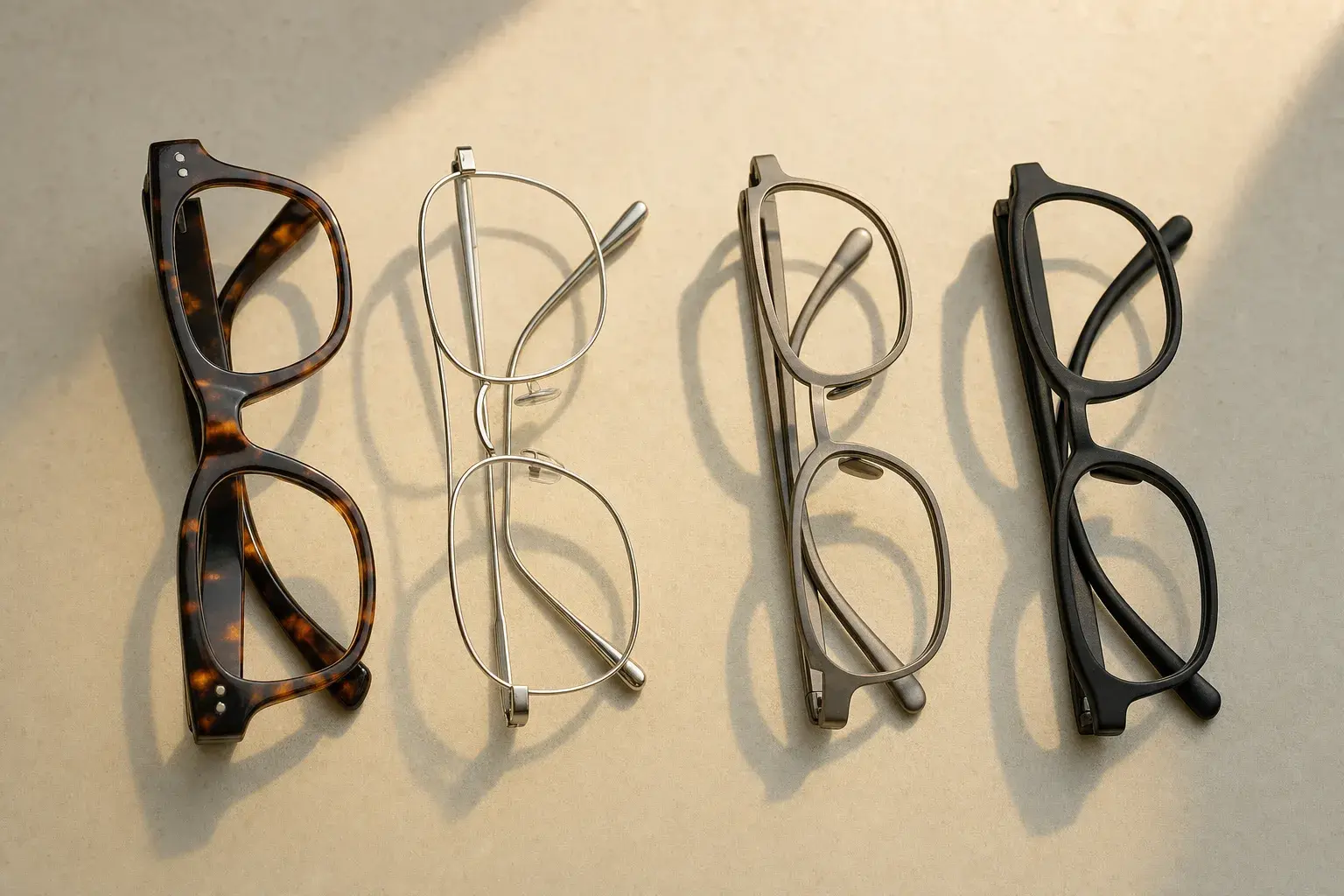
Two frames in the same shape and size can feel like different objects. Material is why: it sets the weight on your nose, whether an optician can bend the frame back into shape, how it survives a hot car, and what it looks like in three years.
| Material | Weight | Adjustable? | Best for |
|---|---|---|---|
| Acetate | Medium to heavy | A little, with heat | Colour, depth and a strong frame line |
| Metal alloy | Light | Yes, easily | Adjustable nose pads and a discreet look |
| Titanium | Very light | Yes | All-day comfort, strong prescriptions, sensitive skin |
| TR90 nylon | Very light | Barely | Sport, children, and anything that gets dropped |
Acetate
A plant-based plastic, cut from sheet rather than injection-moulded, which is why the colour runs through the material instead of sitting on top of it as paint. It is what makes tortoiseshell look like anything at all, and it holds a bold shape better than any other material here.
The cost is weight and heat. Quality acetate is dense, so a large acetate frame is a real presence on your nose, and left on a dashboard in a Gulf summer it will soften and warp. It also has fixed nose pads moulded into the bridge — comfortable if the bridge fits your nose, and unfixable if it does not, which is the single most common acetate complaint.
Metal alloys
Usually stainless steel or monel. Thin, light, visually quiet, and almost always fitted with adjustable nose pads — which is the reason to choose them if a frame has never sat right on your bridge. An optician can move those pads in a few seconds and change the fit completely.
Monel can cause a reaction in people sensitive to nickel. If earrings or watch backs have ever irritated your skin, say so before you order and choose titanium or a coated stainless steel instead.
Titanium
The premium answer to the same brief as metal: about 40% lighter than steel for the same strength, hypoallergenic, and it does not corrode with sweat or salt air. On a strong prescription, where the lenses themselves add weight, titanium is the difference between a frame you notice all day and one you forget.
It costs more, and it is harder to work with — repairs and colour choices are more limited. Beta-titanium is a variant with more flex, used for very thin temples that still spring back.
TR90 and other nylons
A thermoplastic that bends a long way and returns to shape. It is light, effectively unbreakable in normal use, and shrugs off heat and sweat, which is why it dominates sports frames and children's glasses.
Its strength is also its limitation: because it springs back, it cannot be adjusted into a new shape the way metal can. What you buy is the fit you keep, so size it carefully.
Rimless and half-rim are a construction, not a material
A rimless frame holds the lenses on mounts drilled through them, so it is the lightest thing on your face and the most fragile at the drill points. Half-rim hangs the lens from a nylon cord under a metal or acetate brow. Both need thicker lens material to survive being mounted, which limits how thin a strong prescription can be made.
Every product page lists the material under Frame Details, alongside the measurements. If comfort over a long day is what you are optimising for, filter eyeglasses by titanium and compare the frame weights — and read how to clean your glasses, because acetate and coated metal want slightly different treatment.
Written by
Eyevora Editorial
Fit & styling desk at Eyevora. We stock the frames we write about, and we publish every measurement we hold. Spotted something wrong here? Tell us and we will correct it.
- materials
- acetate
- titanium
- durability